Better Delivery Economics Won't Shrink CDNs. It'll Grow Them.
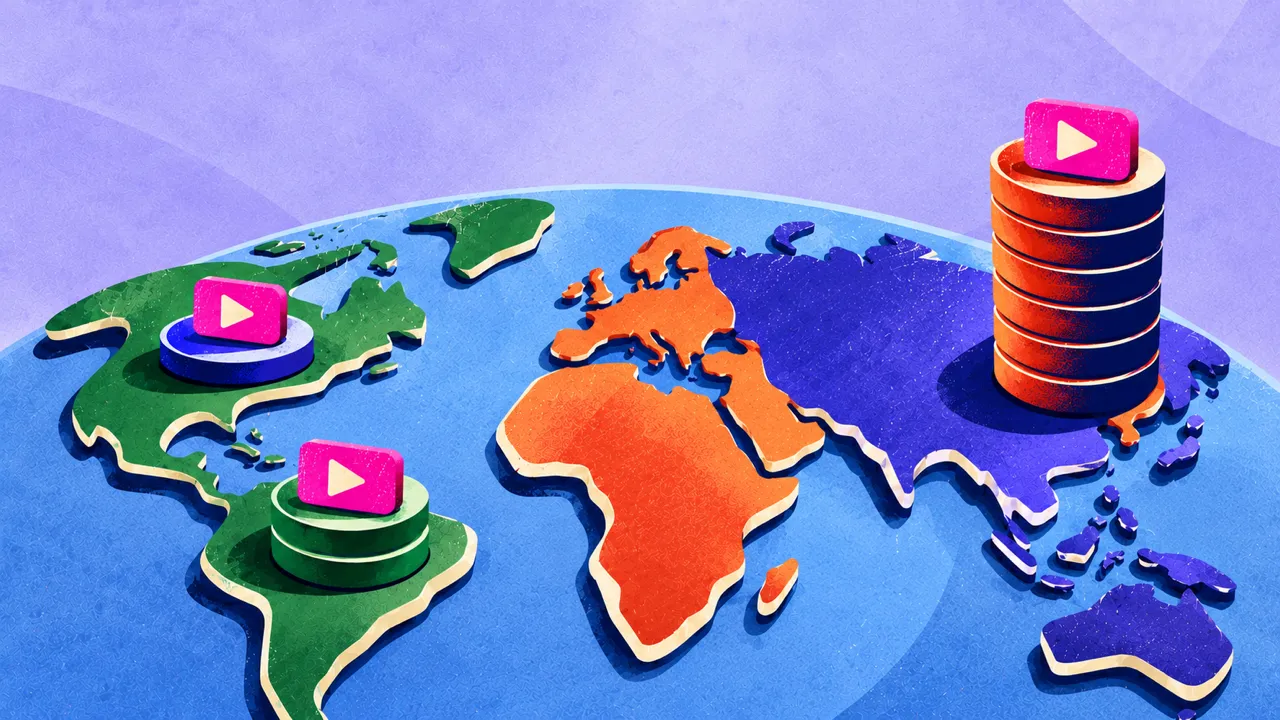
When delivery gets cheaper, platforms do not stream less. They create more, reach farther, and grow the CDN infrastructure underneath it all.


I spent a lot of my time at AWS across the table from companies trying to get their media delivery costs down.
And the longer I did it, the more respect I had for Content Delivery Networks (CDNs), more specifically for the incredible and most competent AWS Edge Services / Amazon CloudFront teams. I’ll start there, because it colors everything else.
Getting a clean stream to someone on the other side of the planet the second they hit play, every time, without them thinking about it. That’s not a small thing. It’s one of those parts of the internet that works so well you forget it’s there.
I’ve had people thinking I believe that “your CDN is ripping you off”. It couldn’t be less true, I think the exact opposite.
It’s so easy to underestimate how much is going on under the hood.
You press play, and in a flash (wink wink Flash Player), something picks which of hundreds of edge locations should serve you, measures the real latency from your network, watches for congestion, and routes around it. All of this, before the spinner disappears. You never notice any of it. So no, your CDN isn’t the issue, on the contrary.
There’s one thing worth understanding about how it works, though.
A CDN gives every viewer their own clean delivery. You ask, you get it. It also means that when a bunch of people want the same thing at once: the latest episode of “My Billionaire Husband Doesn’t Remember Me” on ReelShort (opens in a new tab), Billy Joel’s “100th Live at Madison Square Garden” concert on VEEPS (opens in a new tab), or highlights from the Knicks’ NBA Finals Game 4 comeback on Fubo (opens in a new tab); that same cached content goes out to each of them, one at a time. Your most popular moments are the ones where the same bytes drive down the same road, over and over.
That’s not a flaw. It’s just how it’s built. And it’s the one spot where a little help goes a long way. Here’s where I think this goes.
It’s a layer that sits next to the one you already trust and quietly handles that repeated traffic. Viewers passing popular segments to each other, instead of every one of them going back to the edge for a copy.
The CDN still does everything that actually needs world-class infrastructure: the origin, the first delivery into a region, the long tail, the instant failover. It just stops shipping the same thing to the same crowd a thousand times.
Teammate, not replacement.
The share of that repeated traffic you can hand off between viewers isn’t small, especially on popular content. That number’s big enough to deserve its own post. I’m writing up the actual math, which I’m excited to share with you when ready.
Now the part I get excited about.
There’s an old idea in economics, Jevons paradox: make something more efficient and people don’t use less of it, they use way more. Better steam engines didn’t save coal. They burned more of it, because suddenly you could do more.
Video’s lived this its whole life. Every time the technology got more efficient, nobody banked the savings and stopped. We made more. Sharper video, more of it.
So I don’t buy that more efficient delivery shrinks the CDN world. Everything I’ve seen says it grows it. My view is: stretch the same dollar further and platforms stream more, reach more people, take swings they couldn’t before, all still running on CDN infrastructure underneath.
That’s what we’re unlocking with Sudden.
It’s a small script you add to your site, running alongside whatever CDN you’re on, not instead of it. Browsers share video segments with each other, so the repeated traffic on your popular stuff gets handled between them. And today, it’s success-based: if your bill doesn’t drop, you don’t pay us.
One thing, and I mean it: we think of CDNs as partners. The point was never to take a slice of their business. It’s to make delivery more efficient so the whole thing gets bigger. That’s why we work alongside AWS on this venture. If you’re on the CDN side and this lands, reach out (opens in a new tab). I’d like to talk.
I’m still working on an article to concretely highlight the real math on how much of that repeated traffic you can take back, it’s coming soon. Today I’m curious where you land: does lower cost per stream shrink your world, or grow it?
Tell me where you land (opens in a new tab). I read everything.
Want to run the numbers on your own traffic?
Talk to our founders about your audience, delivery stack, and where peer-assisted delivery could help.